China has become one of the most active secondary markets for used construction equipment. International buyers can find used excavators, dump trucks, cranes, loaders, road machinery, and heavy equipment across several major trading hubs, but the best result comes from knowing where to look, what to inspect, and how to plan export logistics.
Where are China's used equipment hubs?
Hefei, Anhui: a national redistribution center
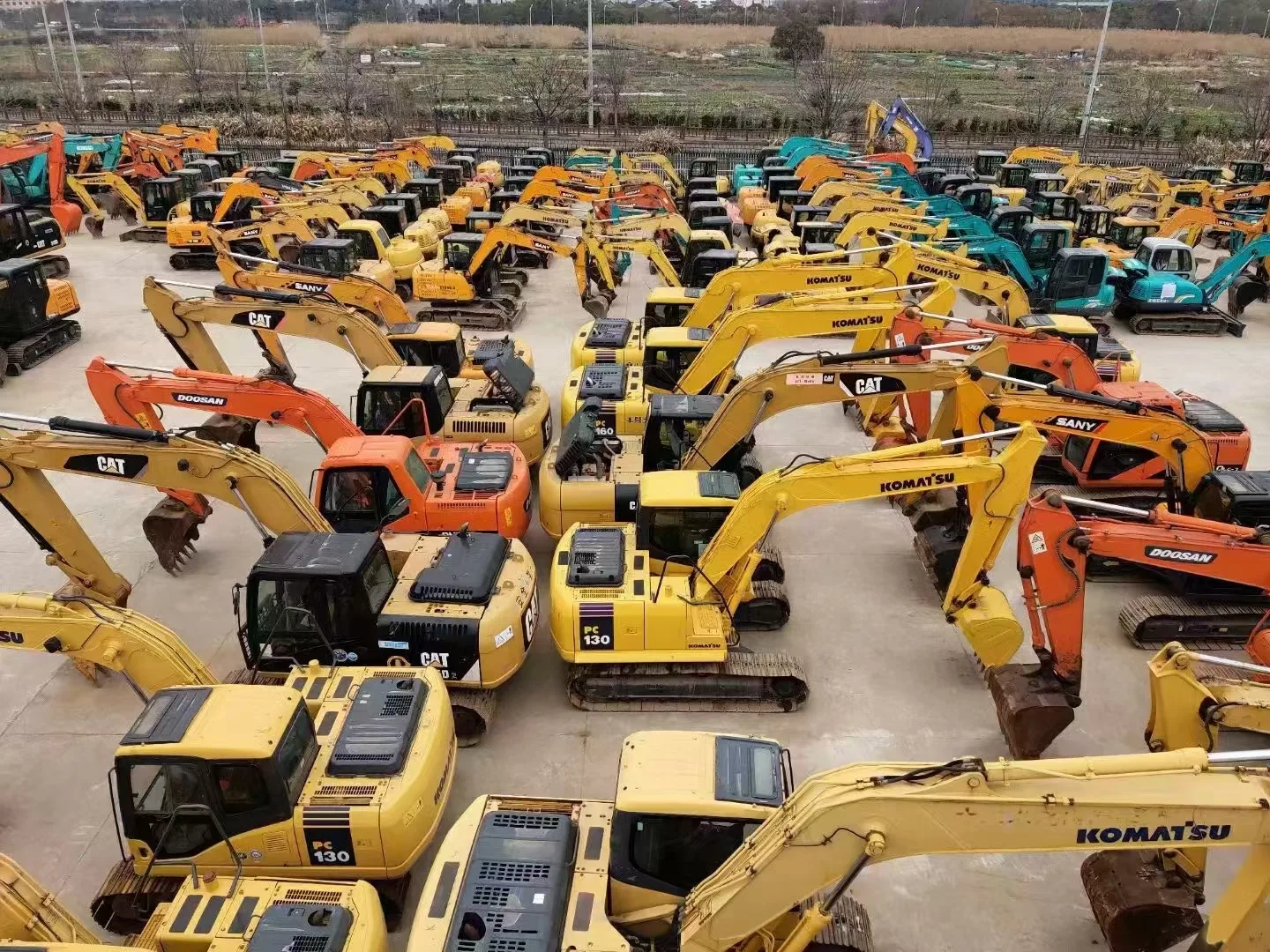
If there is one city that serious used equipment buyers return to, it is Hefei. The capital of Anhui Province has become an important secondary-market equipment trading center, with dealers, auction yards, and reconditioning workshops concentrated around earthmoving machinery.
Hefei's central location makes it a practical collection point for machines coming from surrounding provinces after infrastructure projects finish. Buyers can find excavators, loaders, graders, and other earthmoving machines from both domestic and international brands, often in the 3-8 year age range.
Shanghai: premium stock and export convenience
Shanghai and the Yangtze River Delta represent the premium tier of China's used equipment market. Machines sourced here are often younger, better maintained, and sometimes come from large contractor or state-owned enterprise fleets.
The tradeoff is price. Shanghai equipment usually commands a higher premium than equivalent machines from inland hubs. However, buyers who need international-brand excavators such as Komatsu, Hitachi, Caterpillar, and Volvo often find the Shanghai market worth the premium. Export logistics are also straightforward because the Port of Shanghai is close.
Shenzhen and the Pearl River Delta: export-focused traders
Shenzhen and the broader Guangdong region have many export-oriented equipment traders who are used to working with overseas buyers. These dealers are more familiar with international documentation, pre-export inspections, and container loading for sea freight.
The Pearl River Delta market tends to include compact excavators, forklifts, aerial work platforms, road machinery, and a selection of mid-range excavators and loaders. For first-time importers, Shenzhen can reduce communication and paperwork friction.
Shandong: Liangshan and domestic-brand heavy equipment
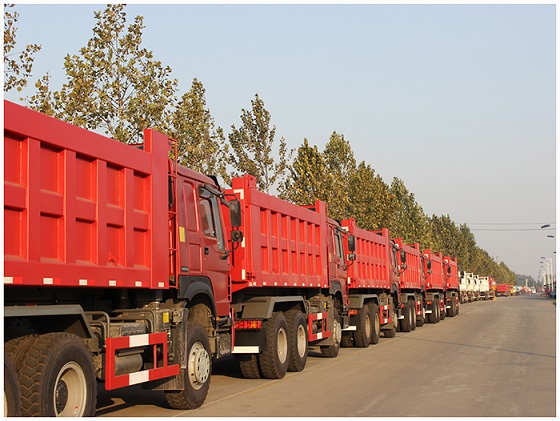
Shandong is different from the other hubs. Liangshan County is widely known in China's used equipment trade for dump trucks, reconditioning workshops, and spare parts supply. Buyers sourcing Sinotruk HOWO, Shacman, Dongfeng, or XCMG dump trucks often compare options there.
More broadly, Shandong has strong representation from domestic heavy equipment brands such as XCMG, SDLG, Lingong, Shantui, and Lonking. For buyers in Southeast Asia, Africa, the Middle East, and Central Asia, domestic Chinese brands can offer a strong cost advantage.
| Region | Specialty | Best for |
|---|---|---|
| Hefei, Anhui | Excavators, loaders, earthmoving machinery | Wide variety and mid-range pricing |
| Shanghai / Yangtze Delta | Premium international-brand machines | Verified stock and easier export logistics |
| Shenzhen / Pearl River Delta | Export-experienced traders and compact equipment | First-time importers and smaller categories |
| Liangshan, Shandong | Dump trucks and domestic-brand heavy equipment | High-volume truck buyers and cost-sensitive markets |
What types of equipment are available?
China's used equipment market covers a broad range of construction and civil engineering machinery. The most common export categories include excavators, dump trucks, wheel loaders, cranes, road machinery, concrete equipment, and foundation equipment.

Excavators
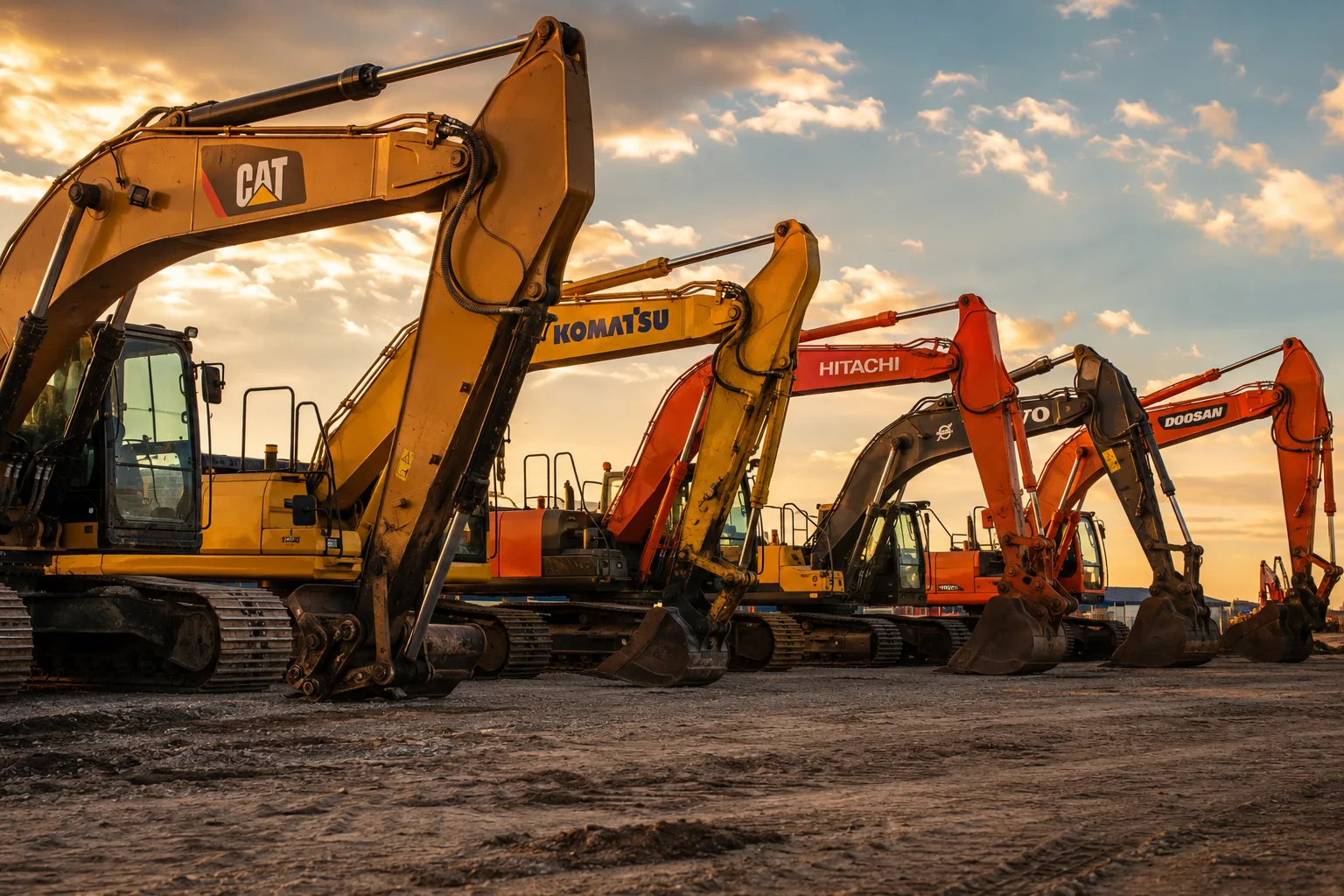
Excavators are the single most traded category. Japanese brands such as Komatsu, Hitachi, Kobelco, and Sumitomo are widely available, alongside Korean brands like Hyundai and Doosan, plus domestic brands such as SANY, XCMG, and Zoomlion. Typical sizes range from 6-ton mini excavators to 36-ton large excavators, with the 20-25 ton class being the most liquid.
Dump trucks
Dump trucks are one of China's strongest export categories. Liangshan is a key market for Sinotruk HOWO, Shacman, Dongfeng, CAMC, and XCMG variants. Payload configurations can range from general construction trucks to 60+ ton mining-spec units.
Wheel loaders
Wheel loaders are available from Chinese brands such as SDLG, XCMG, Lonking, and LiuGong, as well as international brands such as Komatsu, Volvo, and Caterpillar. The most common size is the 5-ton loader with a 3 m3 bucket, though 3-ton and 8-ton machines are also traded.
Cranes and road machinery
Truck cranes, crawler cranes, motor graders, rollers, compactors, and asphalt pavers are also available. XCMG, Zoomlion, Sany, Tadano, Shantui, Caterpillar, Dynapac, HAMM, and Vogele are common names in these categories. Crane inspection requires extra care because structural condition and certification can be more complex.
How to evaluate used equipment quality
Used heavy machinery cannot be evaluated by photos alone. Buyers should check the machine in a structured way and compare hour meter readings with visible wear points.

1. Working hours
For excavators, the hour meter is similar to mileage on a car. Under 5,000 hours usually means lower usage and premium pricing. Machines in the 5,000-10,000 hour range are actively traded. Units above 10,000 hours may still be useful, but component risk increases and inspection becomes more important.
Hour meter tampering can exist in the secondary market. Cross-check the reading against the seat, pedals, control levers, undercarriage wear, paint condition, and service records when available.
2. Undercarriage condition
For excavators and crawler equipment, the undercarriage is one of the most expensive systems to replace. Inspect track shoes, rollers, sprockets, idlers, links, and overall wear. Track shoes with 50% or more life remaining are usually acceptable; heavily worn components should be factored into the landed cost.
3. Hydraulic system
Operate the boom, arm, bucket, swing, and travel functions. Watch for slow response, uneven movement, cylinder leaks, hose leaks, abnormal pump noise, and overheating. Hydraulic repairs can quickly erase a cheap purchase price.
4. Engine condition
Start the engine cold, listen carefully, and watch the exhaust. Persistent blue smoke, heavy black smoke, coolant leaks, oil leaks, knocking, or unstable idle should be treated seriously. Request maintenance records if the seller has them.
5. Structure and repairs
On excavators, inspect the boom, arm, bucket linkage, swing frame, and main frame for cracks, heavy welds, or patch repairs. On dump trucks, check the frame rails, cab mounts, and tipper body. A repaired machine is not automatically bad, but repairs must be disclosed and evaluated properly.
6. Export documents
Confirm the seller can provide the machine serial number, matching identification plate, commercial invoice, packing list, export documentation, and customs information. For some equipment categories and destination countries, additional documents may be required.
Why buy used equipment from China?
The main advantage is cost. A 20-ton excavator that would be expensive to buy new can often be sourced used from China at a much lower price, depending on brand, year, hours, and condition. For buyers in developing markets where project margins are tight, the price difference can be commercially meaningful.
China also has deep inventory. Years of infrastructure construction created a large equipment fleet that now cycles through the secondary market. Buyers can compare machine types, brands, sizes, years, and price points in one country.
Domestic Chinese brands have also become more competitive. SANY, XCMG, Zoomlion, SDLG, and Shantui are increasingly accepted in Asia, Africa, and the Middle East, especially where spare parts and local service support are available.
B2B sourcing tips for overseas buyers
- Visit the right hub for your category. Hefei is practical for earthmoving equipment, Shanghai for premium international brands, Shenzhen for export-focused suppliers, and Liangshan for dump trucks.
- Use third-party inspection when risk is high. Independent inspectors can identify issues that may not be obvious from photos and videos.
- Match the brand to your local parts ecosystem. A machine is only useful if parts and service are available in your destination market.
- Check import age and emissions rules. Some markets restrict used equipment by age or emissions standard. Verify rules before paying a deposit.
- Compare several dealers. Build relationships with 2-3 suppliers so you can compare condition, pricing, and availability.
- Budget for reconditioning. Lower-priced machines may need mechanical work before deployment. Include this in your landed cost calculation.
Conclusion
Sourcing used construction equipment from China can give international buyers a strong combination of price advantage, product depth, and export logistics capability. The key is choosing the right trading hub, inspecting machines carefully, and matching equipment choices to spare parts availability, operator familiarity, and import rules in the destination market.
Start with a focused category, compare several machines, confirm condition with photos and operating videos, and plan export documents before final payment. If you do the preparation properly, China's secondary equipment market can be large, liquid, and accessible.
Ready to source used construction equipment from China? Contact us with your target model, budget, year range, and destination port. We can help you review available stock and export options.
Frequently Asked Questions
What is the typical price range for used excavators from China?
Prices vary by brand, year, hours, and condition. As a rough guide, Japanese-brand 20-ton excavators in the 6,000-10,000 hour range often cost more than domestic Chinese-brand equivalents. Low-hour machines or machines with strong service history will usually command a premium.
How do I verify whether working hours are accurate?
Compare the hour meter with visible wear on the seat, pedals, levers, track pads, sprockets, bucket, boom pins, and paint. If service records or telematics data are available, use them for cross-checking. For high-value purchases, arrange third-party inspection.
Can I import used equipment directly without a local agent?
Technically yes, but first-time buyers usually benefit from working with an experienced supplier or local sourcing contact. Export documentation, customs procedures, equipment loading, and destination-port requirements can create delays if handled incorrectly.
What brands are commonly available in China?
In excavators, Komatsu, Hitachi, Kobelco, Sumitomo, Hyundai, Doosan, SANY, XCMG, and Zoomlion are common. For loaders and road machinery, SDLG, LiuGong, Lonking, Shantui, XCMG, and Caterpillar are often seen. For dump trucks, Sinotruk HOWO, Shacman, and Dongfeng are major names.
How does shipping work for used heavy equipment?
Smaller machines may ship in containers or open-top containers. Larger excavators, loaders, cranes, and dump trucks often require flat rack, breakbulk, or RoRo shipping. The best method depends on machine dimensions, weight, destination port facilities, and freight availability.
Are import age restrictions important?
Yes. Many countries restrict used equipment by age or emissions standard. Common limits can be 5 years, 10 years, or specific emissions requirements, depending on the market. Always verify the destination country's rules before purchase.