A used excavator imported from China can land in the U.S. for a fraction of a domestic machine's price — but the deal only works if the paperwork does. Skip or botch a single document — the EPA declaration, the ISF filing, the customs bond — and CBP can hold your machine at the port, sometimes for weeks, racking up demurrage and storage fees that eat the savings. This guide walks through every requirement in order: what to confirm before you buy, every form your broker will file, what it actually costs, and the mistakes that most often strand a machine at the dock.
Key takeaways
- EPA Form 3520-21 is required for every imported excavator engine — most machines built after 1996 with intact emissions hardware qualify without issue.
- Sea freight for a mini excavator (FCL) typically runs $2,000–$5,000; larger machines ship flat rack or break bulk and are quoted per shipment.
- DOT's HS-7 declaration generally does not apply to off-road excavators — a common point of confusion importers ask about.
- Used equipment must arrive free of soil, mud, and plant debris — USDA/APHIS can inspect and require cleaning before release.
- Inland trucking from the port to your site runs roughly $2–$5 per mile, depending on distance.
What's required to import a used excavator into the USA
Every used excavator entering the United States by sea passes through three separate checks: a customs entry with U.S. Customs and Border Protection (CBP), anEPA emissions declaration for the engine — seeCBP's official requirements for importing off-road engines and equipment— and (for used equipment specifically) a USDA/APHIS soil and pest inspection. Get all three right and the machine clears the port on schedule. Miss one and it can sit in a bonded warehouse while you scramble to fix it — at your expense.
None of this is unusual or excavator-specific — the same three checks apply to most used heavy equipment imports. What trips people up is not knowing all three exist, or assuming a domestic-vehicle requirement (like DOT's HS-7) applies when it doesn't. The sections below cover each one.
Import costs and duty: what to budget beyond the purchase price
The purchase price and ocean freight are only part of the landed cost. Budget for these fees on top, and confirm current rates with your customs broker before you commit to a machine:
| Fee / requirement | What it covers |
|---|---|
| Import duty (HTS 8429) | Excavators generally fall under HTS 8429.52; the general (MFN) rate on this heading is low or zero, but Section 301 tariffs on China-origin goods can add a significant surcharge — confirm the current rate with your broker before budgeting. |
| Merchandise Processing Fee (MPF) | An ad valorem fee (~0.3464% of value) on formal entries, subject to a periodically adjusted minimum and maximum — ask your broker for the current figures. |
| Harbor Maintenance Fee (HMF) | 0.125% of cargo value, charged on ocean shipments entering through a U.S. port. |
| Customs bond | Required for formal entries (used excavators almost always exceed the informal-entry threshold). Your broker arranges a single-entry or continuous bond sized to the shipment. |
| ISF (Importer Security Filing) | Required for ocean cargo; must be filed at least 24 hours before the vessel loads at the export port. Late or inaccurate filings can draw CBP penalties. |
| Customs broker fee | A flat service fee per entry, typically a few hundred dollars, for preparing and filing your paperwork. |
Once the machine clears the port, you still need to move it to your site. U.S. heavy-haul inland trucking rates scale with distance — shorter hauls cost more per mile because the fixed cost of permits and escort is spread over fewer miles:
| Distance from port | Typical cost | Cost per mile |
|---|---|---|
| 0–200 miles | $800 – $1,800 | $4.00 – $5.00 |
| 200–500 miles | $1,400 – $2,800 | $3.50 – $4.50 |
| 500–1,000 miles | $2,500 – $5,000+ | $2.50 – $4.00 |
| 1,000+ miles | $4,000 – $10,000+ | $2.00 – $3.50 |
EPA vs. DOT vs. USDA: the three inspection regimes, compared
Buyers often assume one agency handles "import approval." In practice three different federal agencies each check a different thing, and only two of the three usually apply to an excavator:
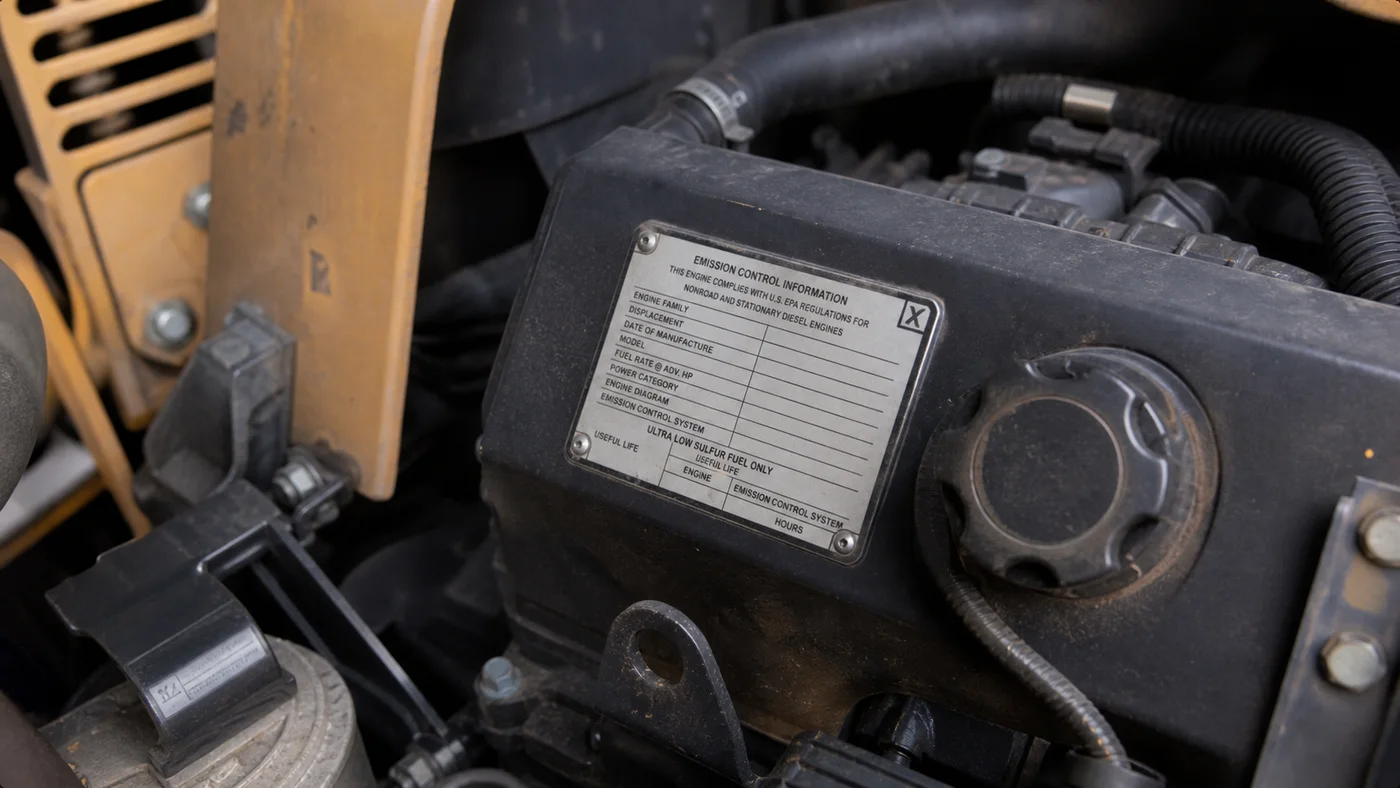
- EPA — applies. Regulates the engine's exhaust emissions under the Clean Air Act. Every non-road diesel engine needs a valid certificate of conformity or an approved exemption, declared onEPA Standard Form 3520-21at entry, per 19 CFR § 12.74. This is the one requirement that can genuinely block an import if the engine doesn't qualify. See our full EPA certificate guide for tier details and exemptions.
- USDA / APHIS — applies. Inspects used equipment for soil, mud, plant material, and pests that could carry invasive species, underUSDA APHIS's regulated organism and soil import rules. The machine should arrive pressure-washed and visibly clean; if CBP or USDA finds contamination, they can hold the shipment for cleaning before release.
- DOT — usually does not apply. The Department of Transportation'sHS-7 declarationis required for imported motor vehicles under Federal Motor Vehicle Safety Standards — vehicles built for use on public roads. An excavator is off-road construction equipment, not a motor vehicle in the DOT sense, so HS-7 is typically not required. This is different from importing an on-road dump truck or a tractor unit, where DOT rules do apply — a distinction that trips up first-time importers more than any other on this list.
Step-by-step: importing a used excavator from China
Step 1: Confirm the engine can meet EPA rules — before you buy
Ask the seller for a clear photo of the EPA label and the engine's model, year, and serial number before you commit. Confirm the engine either holds a valid certificate of conformity or qualifies for an exemption (such as import for replacement, testing, or demonstration). This is the single check that most often determines whether a machine can legally enter at all — confirm it first, not last.
Step 2: File the Importer Security Filing (ISF)
For any ocean shipment, U.S. law requires anImporter Security Filing (ISF)— sometimes called the "10+2" filing, per 19 CFR Part 149— at least 24 hours before the vessel loads at the Chinese port. Your customs broker or freight forwarder typically files this on your behalf using the shipment's booking details. Late or inaccurate ISF filings can draw CBP penalties, so this needs to happen early, not as an afterthought once the machine is already at sea.
Step 3: Secure a customs bond
Used excavators are valuable enough that they almost always require a formal entry, which means a customs bond is mandatory. Your broker arranges either a single-entry bond (covering this one shipment) or a continuous bond (if you plan to import more than once a year) — sized to the commercial value declared on your invoice.
Step 4: Assemble the full document set
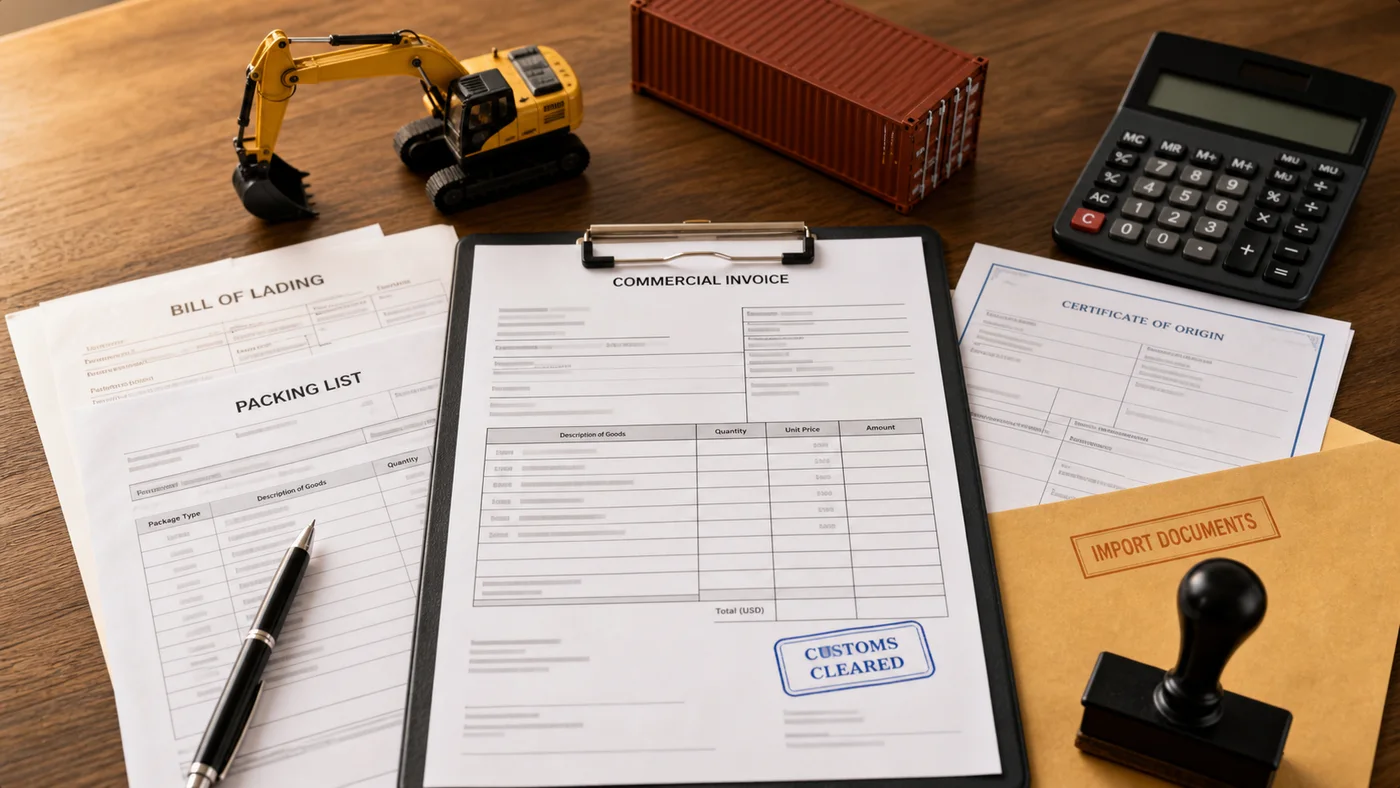
Have every document ready before the machine ships so nothing stalls it at the port:
- Commercial invoice — declares value and the parties to the sale.
- Packing list — details the machine, weight, and dimensions.
- Bill of lading — the shipping contract and proof of loading.
- EPA Form 3520-21 — declares the engine's emissions compliance status.
- Entry Summary (CBP Form 7501) — filed by your broker to formally enter the goods.
- HTS / HS classification — sets the duty rate; excavators typically fall under heading 8429.
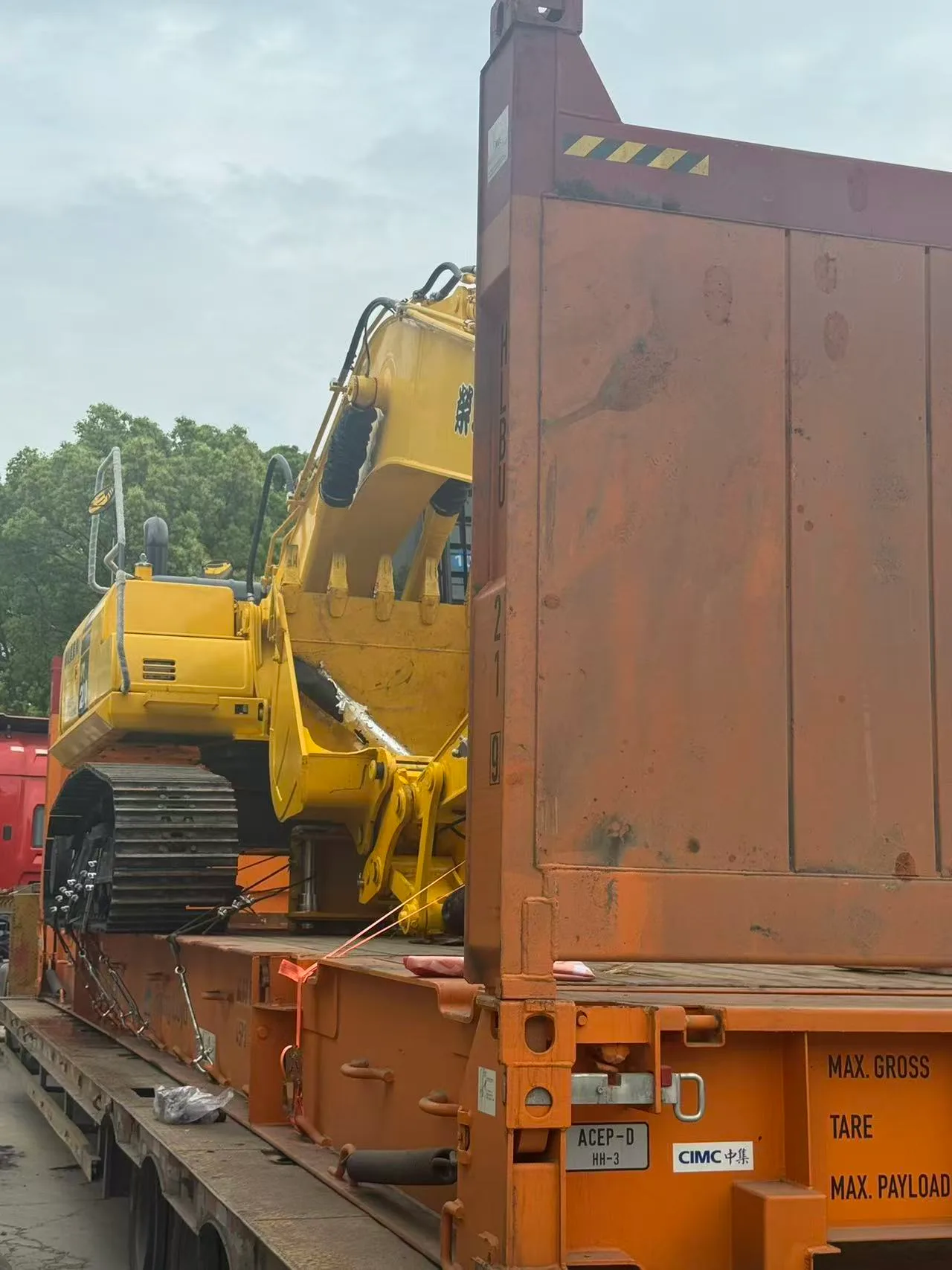
Step 5: Choose the shipping method for the machine's size
How the excavator travels depends on its size and weight. Our fullshipping and export guide covers each option in detail:
- Container (FCL): Best for mini and compact excavators that fit inside a standard container, sometimes after removing the boom or arm.
- Flat rack / open top: For mid-size machines (roughly 8–30 tons) too large for a standard container.
- Break bulk: For large excavators (30 tons+) loaded individually by crane, or for consolidating several machines on one vessel.
Step 6: Inspect before you pay — and clean before it ships
The cheapest way to avoid an expensive import mistake is a thorough inspection before payment, plus making sure the machine is clean before it's loaded. Ask for photos, a walk-around video, an engine running video, hydraulic movement videos, undercarriage photos, and the serial number. A pressure wash before loading also helps the machine clear the USDA/APHIS soil check without delay on arrival. A third-party inspection adds another layer of confidence for a machine you cannot see in person.
Common mistakes that strand a machine at the port
- Buying before confirming EPA status. This is the single most common reason machines are held — confirm the engine label and tier before you send a deposit, not after.
- Filing the ISF late. Because it's due 24 hours before loading in China, not before arrival in the U.S., importers who treat it as a "later" task often miss the window.
- Assuming DOT rules apply. Some importers prepare an HS-7 declaration that isn't needed for off-road equipment, wasting time — or worse, assume no federal agency applies at all and are surprised by the USDA soil check.
- Shipping a dirty machine. Mud and plant debris in the undercarriage is one of the more avoidable reasons for a hold — a pressure wash before loading is cheap insurance.
- Underestimating landed cost. Purchase price and freight are not the whole number — duty, MPF, HMF, the customs bond, broker fees, and inland trucking all add up.
- Skipping inspection. Discovering hydraulic or undercarriage problems after the machine has already cleared customs is the most expensive time to find them.
FAQ
How much does it cost to ship a used excavator from China to the USA?
For a mini excavator shipped as a full container load (FCL), sea freight typically runs US$2,000–$5,000 depending on route, container size, and season. Mid-size machines on flat rack or open top and large machines on break bulk are quoted per shipment based on weight and dimensions.
Do I need a customs broker to import an excavator into the USA?
It's not legally required — CBP allows self-filing — but almost every importer uses a licensed customs broker in practice. A broker files the entry summary, ISF, and EPA declaration correctly, secures your customs bond, and is the fastest way to avoid a hold at the port.
What is EPA Form 3520-21 and do I need it for an excavator?
Form 3520-21 is the EPA declaration filed with your customs entry that states the engine's emissions compliance status — either a valid certificate of conformity or a specific exemption code. Every imported non-road diesel engine, including an excavator's engine, needs this declaration.
Does DOT require a declaration for an imported excavator?
Generally no. DOT's HS-7 declaration applies to imported motor vehicles intended for use on public roads under FMVSS. An off-road excavator is not a motor vehicle for DOT purposes, so HS-7 is typically not required — unlike an imported on-road dump truck or tractor unit.
How much does inland transport cost after the excavator clears customs?
U.S. heavy-haul trucking from the port to your site generally runs about $2–$5 per mile depending on distance, with short hauls costing more per mile than long ones. A 300-mile move is typically $1,400–$2,800; a 1,000-mile move can run $4,000–$10,000 or more.
Can I import an older excavator that doesn't meet current EPA tiers?
Sometimes. Engines without a valid EPA certificate may still qualify under an exemption — for example, engines imported for replacement, testing, or demonstration purposes. Eligibility depends on the engine's age, power rating, and intended use, so confirm before you commit to a purchase.
Import a used excavator with support from start to finish
We help U.S. buyers source inspected used excavators from China, prepare the export and EPA-related paperwork, and coordinate shipping to your port.Send us the machine you need and your destination and we will confirm availability, documentation, and a shipping plan.
Sources
- U.S. EPA — Publications and Forms for Importing Vehicles and Engines (Form 3520-21)
- U.S. Customs and Border Protection — Requirements for Importing Off-Road Engines, Equipment
- U.S. Customs and Border Protection — Importer Security Filing "10+2"
- eCFR — 19 CFR Part 149, Importer Security Filing
- Cornell LII — 19 CFR § 12.74, Importation of Nonroad and Stationary Engines
- USDA APHIS — Regulated Organism and Soil Permits
- NHTSA — Importing a Vehicle (HS-7 Declaration)
- USITC — Harmonized Tariff Schedule, Heading 8429
- General U.S. heavy-haul inland transport rate ranges and SK Used Equipment export experience.